
Lost Pet
Create a missing-pet record with identifying details, last known location, photos, contact information, and optional safety notes.
Start Lost Pet ReportCoastal Georgia Animal Services And Community Support
Use E-Safe pet safety education to prevent lost pets, prepare for disasters, improve identification, and respond safely to animal concerns.
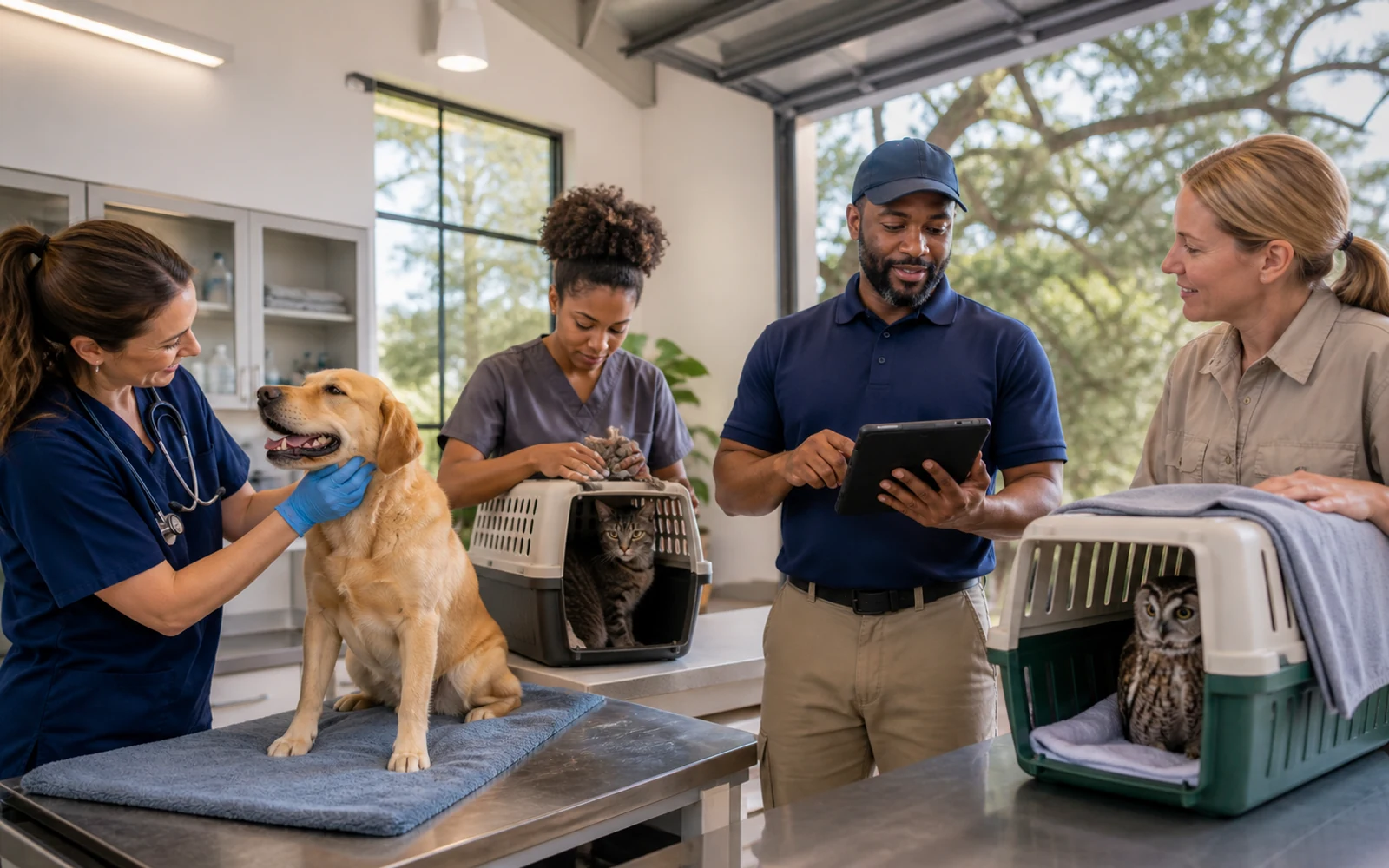
The network keeps E-Safe's established lost and found pet tools while expanding access to official county services, animal-control contacts, shelters, rescues, veterinary providers, wildlife response, prevention guidance, and community participation.
Search animal resources across Chatham, Effingham, Bryan, Liberty, Bulloch, McIntosh, and Tattnall Counties by county, city, service, or organization.
Residents may identify optional animal-service interests without gaining administrative, moderation, or private-data access.
Create and manage missing or found pet records, review active cases, and share public case information through established E-Safe workflows.
Review recent public E-Safe reports, then open Active Cases to search the complete set of available animal cases.
E-Safe does not replace 911, law enforcement, county animal control, a licensed veterinarian, an emergency veterinary hospital, a shelter, or a wildlife authority. E-Safe does not guarantee intake, rescue, treatment, placement, or field response.
Report a lost or found pet, review your existing submissions, and help connect missing animals with their families through E-Safe's Coastal Georgia pet recovery tools.
Note: After you create a lost- or found-pet record, you can share its information on other social media sites without retyping the details. For the best results, complete as many known fields as possible and sign in to each social media account you plan to use before sharing. This helps the sharing process work smoothly and reduces extra steps.
Select the report that matches the situation. The full intake forms remain on their secure dedicated pages so image uploads, location validation, and case ownership continue to work exactly as intended.
Create a missing-pet record with identifying details, last known location, photos, contact information, and optional safety notes.
Start Lost Pet ReportCreate a found-pet record with the discovery location, condition, identifying details, photos, and safe contact information.
Start Found Pet ReportReview and update the animal reports associated with your signed-in E-Safe account.
View My SubmissionsSearch public E-Safe animal cases by record type, location, identifying details, or status. Contact information is limited to what the reporting user authorized for the public case record.
Choose the response that fits the situation, then use the Resource Directory to find an appropriate local or official contact.
Call 911. Do not approach an aggressive, seriously injured, trapped, or traffic-endangering animal. Follow instructions from emergency responders.
Call a veterinarian or emergency veterinary hospital before travel when practical. E-Safe cannot diagnose, triage, or authorize treatment.
Seek medical attention promptly, report the bite to the appropriate local authority, and use Georgia public-health rabies consultation resources.
Do not handle or feed wildlife unless a licensed responder directs you. Record the location and visible condition, keep people and pets away, and contact Georgia DNR or a licensed rehabilitator.
Search the directory for pet food assistance, low-cost spay and neuter, vaccines, microchips, foster support, behavioral resources, or financial-assistance referrals.
Search animal control, shelters, rescues, veterinary providers, emergency care, low-cost services, pet food support, wildlife response, rabies guidance, and end-of-life resources across every E-Safe service-area county. Contact an organization before traveling because hours, eligibility, and intake capacity can change.
64 resources found across 7 counties and 27 service-area municipalities
Veterinary Clinics
Private (Veterinary clinic) - Veterinary clinic
Small animal veterinary clinic
Veterinary Clinics
Private (Veterinary clinic) - Veterinary clinic
Veterinary hospital serving Port Wentworth and Chatham County
Exotic and Specialty Veterinary Care
Private avian and exotic veterinary hospital
Veterinary care for birds, reptiles, small mammals, and other exotic companion animals in the Coastal Georgia region.
Veterinary Clinics
Private (Veterinary clinic) - Veterinary clinic
Full service veterinary hospital
Veterinary Clinics
Private veterinary hospital
Full-service veterinary hospital serving Savannah and multiple Chatham County island and municipal communities.
Animal Control and Shelters
Government - Animal services / shelter
County animal shelter and animal control for Chatham County
Pet Food and Financial Support
County resource guide
County-maintained referrals for food assistance, low-cost veterinary care, spay and neuter, housing support, behavior help, foster options, and surrender prevention.
Shelters and Rescues
Private / Nonprofit - Rescue
Rescue for homeless, abused and neglected dogs and cats
Veterinary Clinics
Private (Veterinary clinic) - Veterinary clinic
General practice veterinary clinic
Shelters and Rescues
Private / Nonprofit - Humane society
Nonprofit humane society and adoption center
Pet Food and Financial Support
Nonprofit assistance program
Temporary monthly pet food assistance for approved Savannah-area households experiencing financial hardship, subject to supply availability.
Military Veterinary Services
U.S. Army veterinary treatment facility
Limited veterinary services for eligible military beneficiaries. Scheduling and prescription refills are handled through the Fort Stewart facility.
Veterinary Clinics
Private (Veterinary clinic) - Veterinary clinic
Dog and cat hospital on Wilmington Island
Emergency Veterinary Care
Private specialty and urgent veterinary hospital
Veterinary specialty and urgent-care services at the Pooler location. Call before travel to confirm current services and hours.
Shelters and Rescues
Private / Nonprofit - Rescue
Foster based rescue partnering with local shelters
Low-Cost Care and Microchips
Humane Society clinic
Low-cost spay and neuter, vaccine clinic, community cat services, wellness services, and microchips for the Greater Savannah region.
End-of-Life and Bereavement
Pet cremation and memorial service
Pet cremation, final-care information, and memorial service options for families navigating the loss of a companion animal.
Veterinary Clinics
Private veterinary hospital
Companion-animal preventive, medical, dental, and surgical care serving Pooler, Bloomingdale, Savannah, and nearby communities.
Shelters and Rescues
Private / Nonprofit - Rescue
Volunteer based dog rescue serving Savannah and Coastal Empire
Emergency Veterinary Care
Private veterinary emergency hospital
Open 24 hours a day, seven days a week for emergency and critical veterinary care. Call before travel when practical.
Veterinary Clinics
Private (Veterinary clinic) - Veterinary clinic
Full service animal hospital
Wildlife Response and Rehabilitation
Wildlife rehabilitation and education organization
Guidance and rehabilitation support for injured or orphaned local wildlife. Call first and leave a message when staff cannot answer.
Shelters and Rescues
Private / Nonprofit - Animal welfare / spay neuter
All volunteer group focused on low cost spay neuter and adoptions
Veterinary Clinics
Private veterinary hospital
Full-service companion-animal veterinary care for Wilmington Island and nearby Chatham County island communities.
Veterinary Clinics
Private (Veterinary clinic) - Veterinary clinic
Full service pet hospital
Animal Control and Shelters
Government - Animal control / shelter
County animal control and shelter
Animal Control and Shelters
Government humane enforcement
Countywide humane-enforcement response for domestic-animal and wildlife complaints, coordinated with municipal police departments and the county shelter.
Shelters and Rescues
Private / Nonprofit - Rescue
Rescue group serving Effingham County
Veterinary Clinics
Private (Veterinary clinic) - Veterinary clinic
Veterinary hospital serving western Effingham County
Veterinary Clinics
Private (Clinic) - Vaccination clinic
Mobile vaccination clinic at Tractor Supply location
Shelters and Rescues
Private / Nonprofit - Rescue
Rescue group frequently serving Effingham and surrounding counties
Veterinary Clinics
Private (Veterinary clinic) - Veterinary clinic
VCA small animal hospital
Shelters and Rescues
Private / Nonprofit - Rescue / welfare
Nonprofit assisting cats and other animals in Bryan County
Animal Control and Shelters
Government - Animal control / shelter
County animal control with facilities in Richmond Hill and Pembroke
Veterinary Clinics
Private (Veterinary clinic) - Veterinary clinic
Full service veterinary hospital with urgent care
Shelters and Rescues
Private / Nonprofit - Rescue / shelter
No kill animal shelter serving Bryan County and region
Veterinary Clinics
Private (Veterinary clinic) - Mobile veterinary clinic
Mobile clinic serving Richmond Hill and greater Savannah area
Veterinary Clinics
Private (Veterinary clinic) - Veterinary clinic
Companion animal hospital
Shelters and Rescues
Private / Nonprofit - Rescue
Rescue referenced for Richmond Hill and Bryan County
Veterinary Clinics
Private (Veterinary clinic) - Veterinary clinic
Community focused clinic with wellness and basic surgery
Veterinary Clinics
Private (Veterinary clinic) - Veterinary clinic
Full service veterinary hospital
Military Veterinary Services
U.S. Army veterinary treatment facility
Routine veterinary care, vaccinations, microchips, registration, diagnostics, and other services for eligible military beneficiaries and government-owned animals.
Veterinary Clinics
Private (Veterinary clinic) - Veterinary clinic
Small animal veterinary clinic
Animal Control and Shelters
Government - Animal services / shelter
County animal services and shelter
Animal Control and Shelters
Private / Nonprofit - Rescue / shelter
No kill nonprofit shelter partnering with Liberty County Animal Control
Veterinary Clinics
Private (Veterinary clinic) - Veterinary clinic
AAHA accredited hospital serving Liberty County
Shelters and Rescues
Community animal rescue
Community animal rescue serving Hinesville and Liberty County. Call to confirm current intake, foster, adoption, and assistance availability.
Veterinary Clinics
Private (Veterinary clinic) - Veterinary clinic
Full service and emergency care hospital
Animal Control and Shelters
Government - Animal services / shelter
County animal shelter and animal control
Low-Cost Care and Microchips
Nonprofit low-cost clinic and animal rescue
Low-cost spay and neuter, wellness vaccines, rescue, pet-food assistance, and community outreach for Bulloch and surrounding counties.
Veterinary Clinics
Private (Veterinary clinic) - Veterinary clinic
Comprehensive care and urgent pet care
Shelters and Rescues
Private / Nonprofit - Humane society / rescue
Foster based rescue and spay neuter assistance
Veterinary Clinics
Private (Veterinary clinic) - Veterinary clinic
Full service veterinary hospital
Veterinary Clinics
Private (Veterinary clinic) - Veterinary clinic
Complete veterinary services for companion animals
Veterinary Clinics
Private (Veterinary clinic) - Veterinary clinic
Veterinary hospital with grooming and dental services
Veterinary Clinics
Private companion-animal hospital
Full-service companion-animal hospital providing preventive, medical, surgical, and diagnostic veterinary care.
Low-Cost Care and Microchips
Nonprofit animal-welfare support
McIntosh County referral for spay and neuter assistance. Call to confirm current eligibility, scheduling, and available support.
Animal Control and Shelters
Government animal services and shelter
County pet adoption, owner-surrender, shelter, and animal-services contact. The county directs wildlife matters to Georgia DNR.
Veterinary Clinics
Private mixed-animal veterinary clinic
Small- and large-animal veterinary care serving Glennville, Reidsville, and surrounding Tattnall County communities.
Animal Control and Shelters
Government animal control and shelter
Animal-control and shelter contact serving Tattnall County. Call before travel to confirm intake, reclaim, and adoption procedures.
Animal Bites and Rabies
State public health guidance
24-hour statewide rabies consultation after possible human exposure. Seek immediate medical care and report animal bites to local authorities.
Wildlife Response and Rehabilitation
State coastal wildlife response
Report stranded, injured, or deceased marine mammals and sea turtles. Do not approach or disturb the animal unless responders direct you.
Wildlife Response and Rehabilitation
State wildlife authority
Official guidance for sick, injured, or orphaned wildlife and access to Georgia licensed wildlife rehabilitator information.
Wildlife Information and Conservation
U.S. Fish and Wildlife Service
Federal wildlife refuge information, conservation contacts, and visitor guidance for the Savannah Coastal Refuges Complex. This is not a domestic animal shelter.
No resources match the current search and filters. Reset the filters or broaden the search.
Sign in to view approved E-Safe members who participate in the Community Animal Services Network.
Sign InPractical preparation can prevent animal loss, improve reunification, and help residents respond safely when a pet or wild animal needs assistance.
Sign in to control animal notices, optional alert emails, case updates, geographic scope, and Animal Heroes directory participation.
Sign InAnswers about E-Safe animal services, lost and found pets, Coastal Georgia resources, wildlife response, volunteer roles, notices, and directory limitations.
It is E-Safe's regional hub for lost and found pet cases, Coastal Georgia animal-service contacts, shelters, rescues, veterinary care, wildlife guidance, prevention resources, volunteers, and community referrals.
The directory covers Chatham, Effingham, Bryan, Liberty, Bulloch, McIntosh, and Tattnall Counties, with selected statewide and regional resources that serve those communities.
No. E-Safe provides community information and referral tools. It does not replace 911, law enforcement, county animal control, licensed veterinary care, shelters, wildlife authorities, or emergency responders.
Use the Lost Pet report to add identifying details, photos, location information, safety notes, and authorized contact information. Keep the record updated when the pet is found or circumstances change.
Use the Found Pet report and provide the discovery location, condition, identifying details, photos, and safe contact information. Contact local animal services and ask a veterinary clinic or shelter about microchip scanning.
Keep people and pets away, do not feed or handle the animal unless instructed, record its location and visible condition, and contact Georgia DNR or a licensed wildlife rehabilitator.
Registration includes an optional Animal Service Work interest. All new accounts remain Subscribers. Claimed volunteer or organization roles stay pending until an administrator reviews them.
No. The directory recognizes approved participation and separate public-listing consent. It does not certify licensing, employment, emergency authority, or E-Safe endorsement.
Animal-alert emails are off by default and use the E-Safe Email Management System. Members can change preferences or unsubscribe. Required operational emails for cases they create are handled separately.
E-Safe periodically reviews the directory, but hours, eligibility, service areas, and intake capacity can change. Contact the organization directly before traveling or relying on a service.