
Share this article
E-Safe News · Georgia News
Watch for Yellow-Legged Hornet Nests in Coastal Georgia
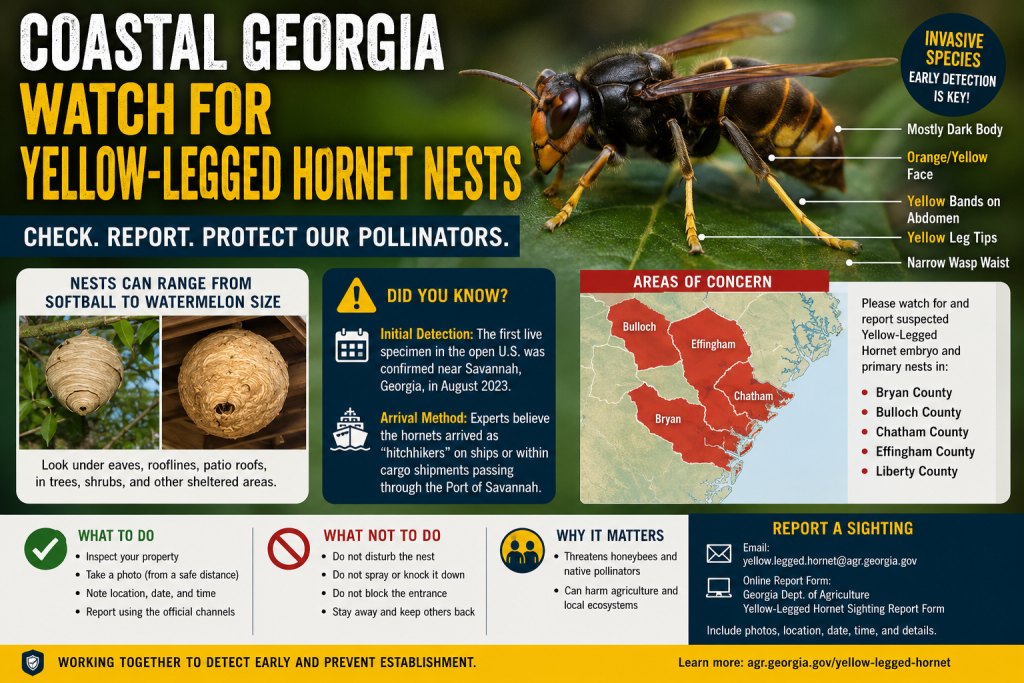
Georgia officials are asking Coastal Georgia residents and businesses to check for Yellow-Legged Hornet nests, avoid disturbing them, and report suspected sightings through state channels.
Georgia agriculture officials are asking residents and businesses in parts of Coastal Georgia to remain alert for suspected Yellow-Legged Hornet embryo and primary nests.
The current warning is focused on early nest detection. That matters because a small nest found and reported now may prevent a much larger secondary nest later in the season. For local neighborhoods, commercial properties, farms, beekeepers, landscaping crews, and outdoor work areas, this is a practical property awareness issue.
What Is the Yellow-Legged Hornet?
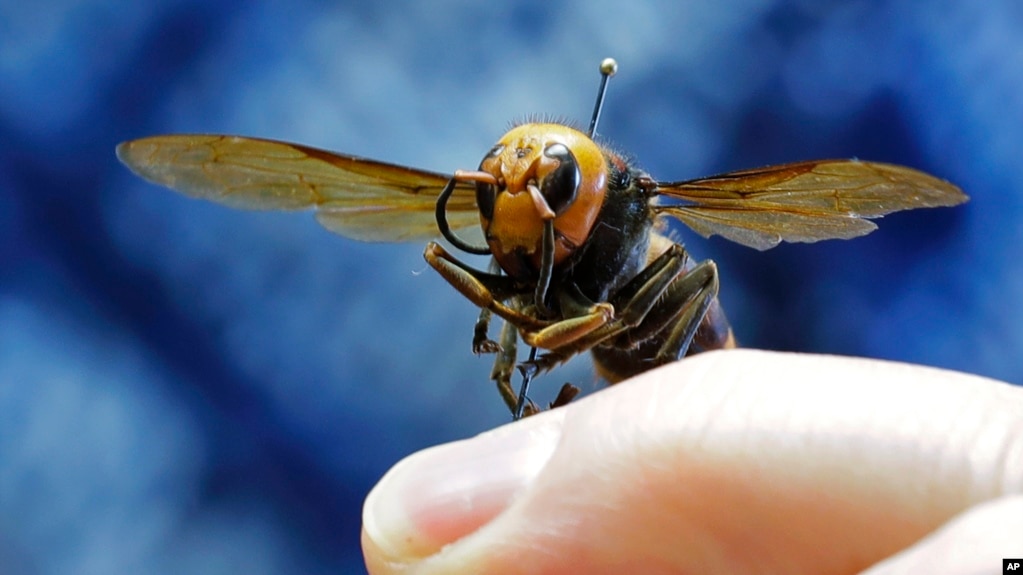
The Yellow-Legged Hornet, scientifically known as Vespa velutina, is a non native social wasp species. It is native to tropical and subtropical areas of Southeast Asia.
The species is not the Northern Giant Hornet. The Yellow-Legged Hornet is smaller, has different markings, and is the species currently being tracked in Georgia and South Carolina.
In the United States, the first confirmed live specimen in the open environment was identified in the Savannah area in August 2023. Since then, state and federal agriculture officials have been working with university experts to track, trap, and eradicate the pest before it becomes permanently established.
Local Context Note: The first confirmed live Yellow-Legged Hornet specimen in the open United States was reported near Savannah, Georgia, in August 2023. Agriculture officials and subject matter experts have indicated the species likely arrived as a hitchhiker through ship traffic or cargo movement connected to the Port of Savannah. That likely pathway is one reason Coastal Georgia residents, businesses, ports, warehouses, logistics sites, and outdoor work areas are important parts of the early reporting effort.
Current Areas of Concern
The latest Georgia Department of Agriculture alert asks residents, especially those in Bryan, Bulloch, Chatham, Effingham, and Liberty counties, to watch for and report suspected Yellow-Legged Hornet embryo and primary nests.
Georgia’s current Yellow-Legged Hornet FAQ identifies confirmed detections in the Savannah area, specifically Chatham, Bryan, Effingham, and Liberty counties. It also notes activity in the Hilton Head area of South Carolina.
For readers in Savannah, Pooler, Bloomingdale, Richmond Hill, Port Wentworth, Garden City, Effingham County, Bryan County, Liberty County, and surrounding communities, the takeaway is simple. Check exterior areas carefully, do not disturb suspected nests, and report possible sightings through the official state channels.
Why Early Reporting Matters
Yellow-Legged Hornet nests develop in stages.
Embryo and Primary Nests
Embryo nests are small early nests built by queens as colonies begin. Primary nests follow and can grow from roughly softball size to watermelon size.
Secondary Nests
If a primary nest is not found, the colony can later expand into a much larger secondary nest with thousands of hornets and reproductive queens.
That is why early reporting is a key part of Georgia’s eradication strategy.
Why This Species Matters Locally
The main concern is not everyday outdoor activity. The larger concern is the threat to honeybees, native pollinators, and agriculture.
Yellow-Legged Hornets feed on other insects, including bees. Honeybees and native bees support crops, gardens, fruiting plants, and many local landscape and farm systems. If this species becomes established, it could create long term pressure on pollinators and the businesses that depend on them.
This also matters for commercial properties. Warehouses, logistics sites, farms, nurseries, landscaping businesses, outdoor storage yards, construction areas, and large residential communities may have exterior spaces where nests can be missed until they grow.
What To Look For
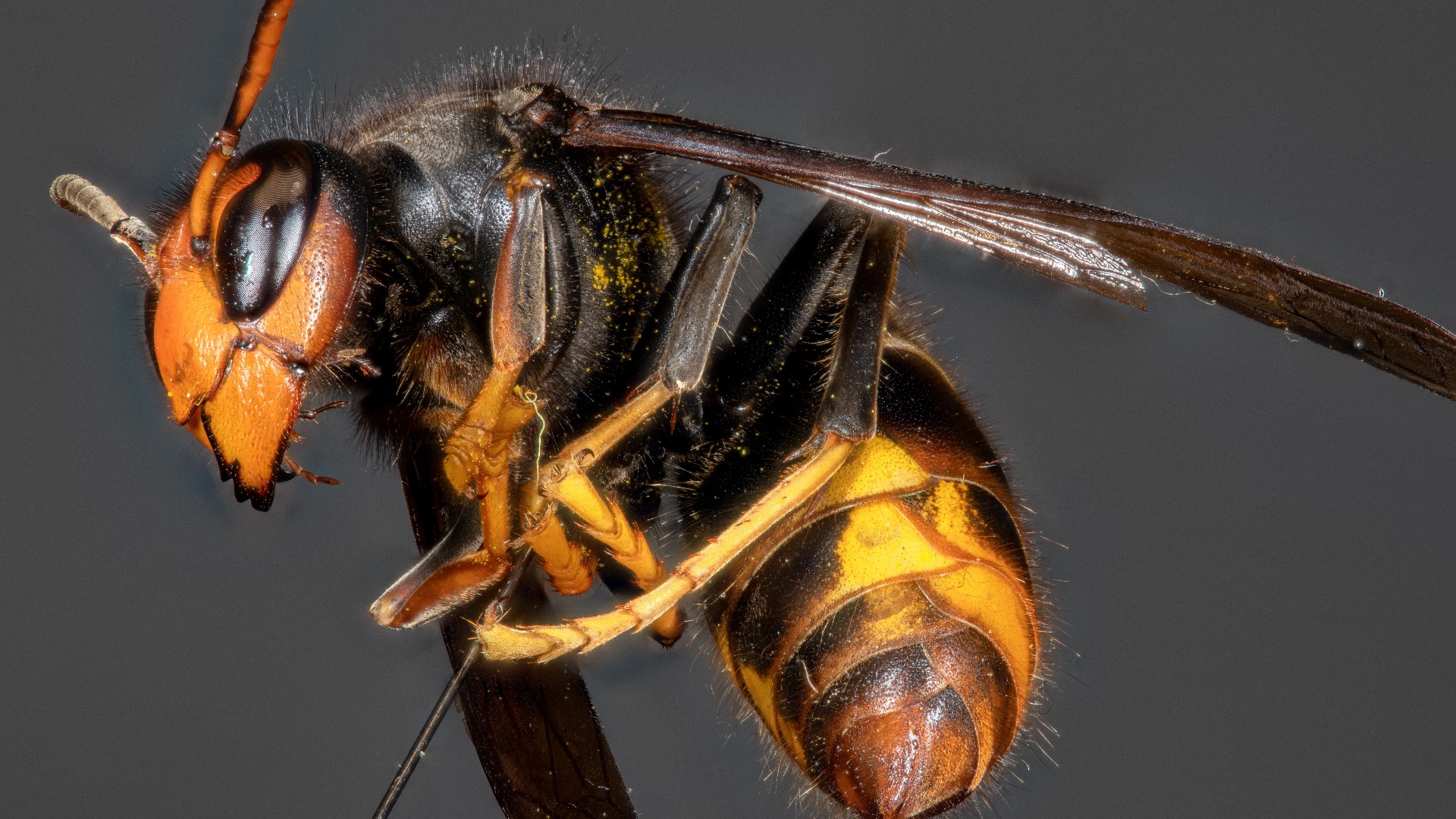
- Adult hornets are usually about 0.7 to 1 inch long.
- The body is mostly dark.
- The abdomen has yellow or orange banding.
- The legs are darker near the body and yellow toward the lower portion.
- The insect has a narrow wasp waist.
- Nests are made of paper like material and are usually above ground.
Embryo and primary nests may be found in trees, shrubs, bushes, awnings, porches, eaves, and other sheltered or elevated areas around homes, businesses, and wooded edges.
State officials also advise beekeepers to watch for hawking activity around hives, especially before noon and after 5 p.m.
What Residents Should Do
Residents should check exterior areas without disturbing insects or nests.
Look around porch ceilings, eaves, rooflines, sheds, awnings, shrubs, small trees, wooded edges, and low branches. If something looks suspicious, keep your distance.
Take a clear photo only if it is safe. Note the location, date, time, and what you observed. Keep children, pets, and visitors away from the area until it is properly assessed.
What Businesses Should Do
Business owners and property managers should brief employees who work outdoors or inspect exterior property areas.
This includes landscaping crews, maintenance staff, warehouse personnel, security teams, farm workers, pest control vendors, construction crews, and outdoor operations teams.
If a suspected nest is found, mark off the area from a safe distance and report it. Do not assign employees to remove or disturb the nest.
What Not To Do
- Do not knock down a suspected nest.
- Do not spray it yourself.
- Do not burn it.
- Do not block the entrance.
- Do not shake branches or structures near the nest.
- Do not send children, employees, visitors, or pets close to confirm it.
- Do not assume every wasp or hornet is a Yellow-Legged Hornet.
Georgia has native and established look alike insects, including species that are beneficial pollinators. Accurate reporting helps officials confirm the species before action is taken.
Human and Pet Safety
Georgia officials do not describe the Yellow-Legged Hornet as a significant general threat to humans. However, any stinging insect can become dangerous if a nest is disturbed.
People with allergies to bee or wasp venom should stay away from suspected hornets or nests. Pets should also be kept away from suspected nest areas.
For a routine sighting, use the state reporting channels. For a medical emergency, severe allergic reaction, or immediate danger, call 911.
Where To Report a Sighting
Report suspected Yellow-Legged Hornets or nests to the Georgia Department of Agriculture.
Email: yellow.legged.hornet@agr.georgia.gov
Online Report Form: Georgia Department of Agriculture Yellow-Legged Hornet Sighting Report Form
When reporting, include photos if safely available, the location, date, time, and any details about the nest or hornet activity.
Professional Sourcing Section
Agency: Georgia Department of Agriculture. Used for the current June 2026 alert, counties named, early nest warning, and reporting protocol.
Agency: Georgia Department of Agriculture. Used for species overview, origin, nest stages, pollinator risk, reporting link, and life cycle details.
Agency: Georgia Department of Agriculture. Used for confirmed Georgia locations, human safety guidance, nest location guidance, and reporting options.
Agency: USDA Animal and Plant Health Inspection Service. Used for federal identification guidance, first U.S. detection history, look alike insects, and Georgia reporting direction.
Yellow-Legged Hornet, Protecting Pollinators
Agency: University of Georgia Bee Program. Used for beekeeper risk, Savannah area detection context, diagnostic traits, and look alike comparison guidance.
USDA Supports States’ Yellow-Legged Hornet Hunters and Pollinator Health
Agency: USDA APHIS. Used for federal context on the Savannah detection and state support efforts.
Second Yellow-Legged Hornet Nest Found Near Savannah, After Species Very Likely Entered Via Port
Publisher: The Current and Georgia Public Broadcasting. Used for the likely Port of Savannah arrival pathway and public reporting context.
Yellow Legged Hornet Vespa Velutina Nest Found in Georgia
Publisher: 11Alive / WXIA. Used for image source credit and related Georgia local coverage context.