
Share this article
E-Safe News · Fraud Awareness
Pooler Planning and Zoning Scam
Fraudsters are impersonating Pooler Planning and Zoning with fake invoices and wire transfer demands. Learn the email red flags, city payment warning, and how to verify directly with Pooler City Hall.

Local Fraud Alert
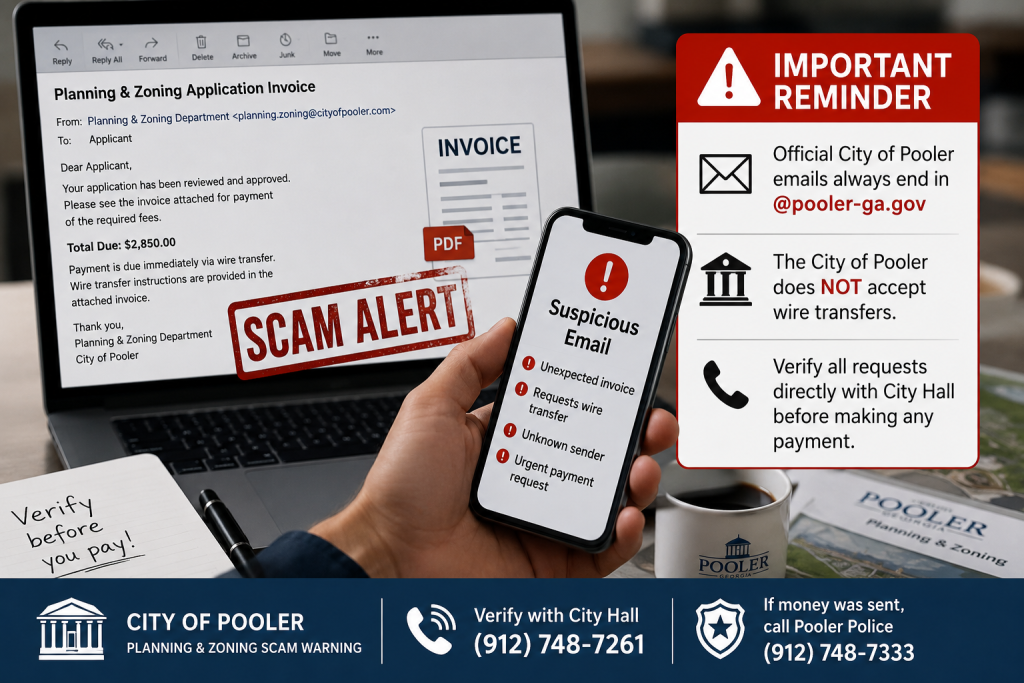
Fraudsters are targeting Pooler residents, developers, applicants, and property related contacts with phishing emails that appear to come from the City of Pooler Planning and Zoning Department.
The emails are designed to look professional. They may reference legitimate city processes, include official looking invoices, and demand payment through a wire transfer for application approvals, fees, or related municipal business.
Immediate warning: The City of Pooler does not accept wire transfers for these payments. Official city emails will end in @pooler-ga.gov.
That combination makes the scam especially dangerous. A message that includes familiar project details, accurate names, or real application information may appear legitimate at first glance. Residents and applicants should treat any unexpected payment request as suspicious until it is verified directly through City Hall.
A Targeted Local Threat
The City of Pooler reported that scammers used publicly available Planning and Zoning packets to identify and contact potential victims. That means the scam was not random. It used local records and real planning related information to make fraudulent messages look more credible.
Pooler later stated that identifiable or personal contact information was removed from publicly available packets to help protect the public from future scam operations. Even with that precaution in place, officials continue to warn that scammers may use professional language, legitimate looking invoices, and accurate project details to pressure recipients into sending money.
Red Flags to Watch For
The sender claims to be from the city, but the email does not end in @pooler-ga.gov. The message requests payment by wire transfer. The email includes an unexpected invoice, attachment, or payment link. The sender claims payment will guarantee application approval. The message creates urgency or pressures the recipient to act immediately. The sender discourages phone verification or tries to keep all communication by email.
How to Verify Before Paying
Anyone who receives a Planning and Zoning related payment request should contact the City of Pooler directly before responding, clicking a link, opening an attachment, or sending money.
Verify with City Hall
Call the City of Pooler at (912) 748-7261 using a trusted number from the city’s official website.
If Money Was Sent
Contact the Pooler Police Department at (912) 748-7333 and notify your bank or wire provider immediately.
The safest response is simple. Do not reply to the suspicious email. Do not wire money. Do not click invoice links. Call the city directly and confirm whether the request is legitimate.
Why This Scam Works
This type of fraud works because it feels specific, local, and official. A recipient who is already working through a permit, zoning, development, or application process may be expecting city communication and may be more likely to trust a professional looking invoice.
Criminals often rely on urgency, familiarity, and pressure. The more official the message appears, the more important it is to verify the source before taking action.
Bottom Line
Before sending any payment connected to Pooler Planning and Zoning, verify the sender, confirm the payment method, and call the City of Pooler directly. If a message asks for a wire transfer, treat it as a major warning sign.
Sources
City of Pooler Public Notice, Scam Emails
Official city notice warning residents and developers about fraudulent Planning and Zoning emails, official looking invoices, and wire transfer requests.
City of Pooler Public Notice, Scam Email Update
Official city update explaining how publicly available Planning and Zoning packets were used and what changes were made to reduce future targeting.
City of Pooler Planning and Zoning Department
Official Planning and Zoning department page with city contact information and department context.
FAQ’s
Frequently Asked Questions (FAQs)
Find clear answers about this E-Safe page, its available features, community resources, responsible use, and related services for Coastal Georgia residents. Use the source links and official contacts when making local decisions.
This section addresses commonly asked questions about this topic
What should I do if the email looks real and includes accurate project information?
Treat the message as unverified until you confirm it directly with the City of Pooler through a trusted phone number or official city contact page. Scammers may use real names, addresses, application details, meeting references, or planning packet information to make the email appear legitimate. Accuracy alone does not prove the message came from the city. Before opening attachments, clicking payment links, replying, or forwarding the email internally, call the city directly and ask whether the invoice, fee request, deadline, and payment instructions are valid.
Should I forward the suspicious email to someone else in my company or family?
Do not forward suspicious attachments or links unless you are sending the message to a person responsible for security, accounting, legal review, or law enforcement reporting. Forwarding the email casually can spread the risk because another person may click the link or open the attachment. The safer approach is to take screenshots, preserve the original email, and tell others not to interact with it until it is verified. If a business has multiple people handling applications or payments, one person should be assigned to verify the request directly with City Hall.
What records should I save if I think I received one of these scam emails?
Save the original email, the sender address, the subject line, the full date and time received, any invoice attachment, any payment instructions, and any phone numbers or links included in the message. Do not delete the email immediately because the full message may contain technical details that can help investigators or financial institutions. If money was requested or sent, also save bank records, wire receipts, confirmation numbers, and any follow up communications from the sender. Keep the records organized in one folder so they can be provided quickly if needed.
How can contractors, developers, and property owners reduce the chance of falling for this type of scam?
Use a strict payment verification process for all government related fees. Before any payment is made, confirm the invoice through a known city phone number, compare the sender’s email domain, and verify the accepted payment method. Businesses should also require a second internal review before paying any new invoice or changing any payment method. Staff should be trained that official looking documents, accurate project details, and urgent language are not enough to approve payment. A simple rule works best: no verified city confirmation, no payment.
What should I do if I already replied to the email but did not send money?
Stop communicating with the sender immediately and do not open any attachments or click any links. Change passwords if you provided login information or clicked a suspicious link that asked for credentials. Notify anyone else who may be involved in the project or payment process so they know not to trust related messages. If you provided personal, business, banking, or project information, contact the City of Pooler directly and consider filing a report with the appropriate fraud reporting channels. Even if no money was lost, reporting the attempt can help identify patterns and protect other residents.